McDonald’s Rival Closes: Chick-fil-A Massive Growth
 Sarah Mitchell
May 03, 2026
3 min read
83 views
Sarah Mitchell
May 03, 2026
3 min read
83 views

As legacy competitors like Boston Market face
McDonald’s Rival Closes as Chick-fil-A Continues Massive Growth
The fast-food landscape is witnessing a dramatic shift as legacy brands struggle to maintain their footprint while Chick-fil-A accelerates its dominance. Recently, news surfaced regarding the widespread shuttering of Boston Market locations, a long-standing competitor in the rotisserie and quick-service chicken space. While this rival faces legal hurdles and mass closures, Chick-fil-A is capitalizing on the vacancy in the market by expanding its reach into new territories and innovative service formats.
The Downfall of Traditional Quick-Service Competitors
Boston Market, once a powerhouse in the "home-style" meal segment and a direct competitor for the dinner-time crowd that McDonald’s and Chick-fil-A covet, has seen its store count plummet from over 1,200 to just a handful of operational sites. This decline is attributed to several critical factors that Chick-fil-A has managed to avoid:
- Operational Consistency: Unlike struggling rivals, Chick-fil-A maintains a rigorous franchise model that ensures uniform quality across every zip code.
- Financial Stability: Many legacy brands have been bogged down by debt and litigation, whereas Chick-fil-A remains a privately held, cash-rich entity.
- Adapting to Consumer Habits: While older chains failed to modernize their digital presence, Chick-fil-A’s mobile app and loyalty rewards program have become industry benchmarks.
Chick-fil-A’s Aggressive Expansion Strategy
As McDonald’s Rival Closes as Chick-fil-A Continues Massive Growth, the Atlanta-based chicken giant is not just filling physical gaps in the suburbs; it is reinventing the urban dining experience. The company recently announced plans to invest billions into international expansion, targeting markets in Europe and Asia by 2030.
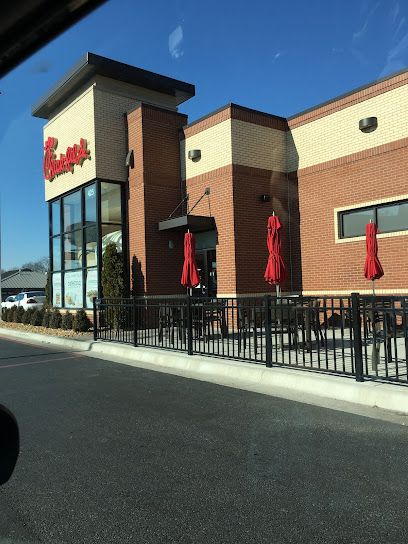
Domestically, the growth is visible through the introduction of "Mobile-Thru" lanes and elevated drive-thru concepts. These high-capacity designs allow the chain to process double the volume of a standard McDonald’s location, contributing to an average unit volume (AUV) that exceeds $9 million per restaurant—a figure that dwarfs most of its competitors.
Why the Market Share is Shifting
The closure of regional rivals provides a unique opportunity for Chick-fil-A to capture "displaced" customers. When a local Boston Market or a struggling Hardee’s franchise closes, Chick-fil-A often sees a direct uptick in its lunch and dinner traffic. The brand’s focus on a limited, high-quality menu allows it to maintain speed even as it scales.
Future Outlook for the Chicken Sandwich War
With one major rival effectively exiting the national stage, the battle for chicken supremacy now focuses on Chick-fil-A versus the established giants like McDonald’s and Popeyes. However, Chick-fil-A’s unique corporate culture and commitment to customer service continue to provide a moat that rivals find difficult to breach. As more competitors face the reality of downsizing, Chick-fil-A’s trajectory suggests it will soon challenge the top two spots in total U.S. fast-food sales, regardless of its Sunday-closing policy.